Understanding the Causes of Yellow Leaves in Plants
Seeing yellow leaves on your precious plants can be alarming. Yellowing leaves often signify that something is amiss, whether it’s a nutrient deficiency, pest infestation, or environmental stress. In this comprehensive guide, we will explore the various causes of yellow leaves in plants, how to identify them, and solutions to revive your plants.
1. Nutrient Deficiencies
One of the most common causes of yellow leaves is nutrient deficiencies. Plants require various nutrients to thrive, and when they are lacking, symptoms appear.
1.1 Nitrogen Deficiency
Nitrogen is crucial for plant growth as it is a key component of chlorophyll. A nitrogen deficiency often presents as yellowing leaves, especially older leaves, while new growth remains green. To remedy this, consider incorporating nitrogen-rich fertilizers like blood meal or fish emulsion into your soil.
1.2 Iron Deficiency
Iron is essential for chlorophyll production. An iron deficiency often results in yellow leaves with green veins—a condition known as chlorosis. This typically affects younger leaves first. Adding iron chelates to your soil can help correct this imbalance.
1.3 Magnesium Deficiency
Magnesium plays a vital role in photosynthesis. When deficient, you may notice yellowing between leaf veins. This often occurs in older leaves. To boost magnesium levels, consider adding Epsom salt to your plant care routine.
2. Watering Issues
Water stress can also lead to yellow leaves. Both overwatering and underwatering cause significant problems for plants.
2.1 Overwatering
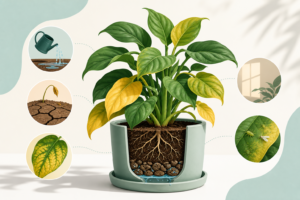
Overwatering can suffocate roots, leading to root rot, which in turn causes yellow leaves. Ensure your pots have adequate drainage, and only water when the top inch of soil is dry.
2.2 Underwatering
Conversely, underwatering leads to dehydration. Leaves may turn yellow, dry out, and eventually drop. To prevent this, establish a regular watering schedule based on your plant’s needs.
3. Pest Infestations
Pests can wreak havoc on plants, causing leaf yellowing as a symptom of stress or damage. Common pests include:
3.1 Aphids
Aphids feed on sap, leading to curled, yellowing leaves. Regularly inspect your plants and use insecticidal soap or neem oil to control infestations.
3.2 Spider Mites
Spider mites thrive in dry conditions, causing stippled, yellow leaves. Increase humidity and use miticides or insecticidal soaps to manage them.
3.3 Whiteflies
Whiteflies can cause yellowing leaves and are often found on the undersides of leaves. Yellow sticky traps can help monitor and reduce their population.
4. Environmental Factors
Environmental stress can significantly impact plant health, often resulting in yellow leaves.
4.1 Temperature Extremes
Plants exposed to extreme temperatures, whether too hot or too cold, can exhibit yellowing leaves. Ensure your plants are in an environment with stable temperatures suitable for their species.
4.2 Light Conditions
Inadequate light can lead to yellow leaves as plants struggle to photosynthesize. Conversely, too much direct sunlight can scorch leaves, causing them to yellow. Assess your plant’s light needs and adjust their placement accordingly.
5. Soil Quality
Soil quality plays a significant role in plant health. Compacted or poor soil can restrict root growth, leading to yellow leaves. Consider testing your soil pH and nutrient levels to ensure optimal conditions for your plants.
6. FAQs
6.1 How do I know if my plant is getting too much or too little water?
Check the top inch of soil; if it’s dry, it may need water. If it’s soggy, you might be overwatering.
6.2 Can yellow leaves recover?
Depending on the cause, yellow leaves can recover with proper care. However, severely damaged leaves may not return to green.
6.3 Are yellow leaves always a bad sign?
Not always. Some plants naturally shed older leaves as part of their growth process, but persistent yellowing indicates a problem.
Conclusion
Yellow leaves are a warning sign that requires attention. By understanding the underlying causes—be it nutrient deficiencies, watering issues, pests, environmental stress, or soil quality—you can take appropriate measures to restore your plant’s health. Regular monitoring and appropriate care will ensure your plants remain vibrant and thriving.