Best Indoor Plants: A Comprehensive Guide to Greenery for Your Home
Bringing nature indoors not only beautifies your living space but also improves air quality and boosts your mood. With a plethora of indoor plants available, it can be overwhelming to select the best ones for your home. In this comprehensive guide, we’ll explore the best indoor plants, their care requirements, and how they can fit into your lifestyle.
1. Why Choose Indoor Plants?
Indoor plants offer a myriad of benefits, including:
- Air Purification: Many plants filter out toxins and improve the quality of air in your home.
- Aesthetic Appeal: Indoor plants add color, texture, and life to any room.
- Stress Reduction: Studies show that being around plants can lower stress levels and promote relaxation.
- Humidity Regulation: Plants release moisture into the air, helping to maintain humidity levels.
2. Factors to Consider When Choosing Indoor Plants
When selecting indoor plants, consider the following factors:
- Light Conditions: Assess the natural light in your home. Some plants thrive in bright light, while others prefer low-light conditions.
- Space: Consider the size of the plant and how much space you have available.
- Maintenance Level: Determine how much time you’re willing to dedicate to plant care.
- Pet Safety: If you have pets, ensure the plants you choose are non-toxic to animals.
3. Top 10 Best Indoor Plants
3.1. Snake Plant (Sansevieria)
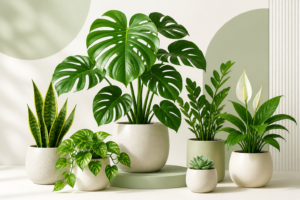
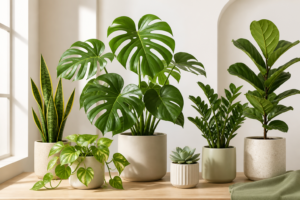
The snake plant, also known as mother-in-law’s tongue, is a resilient plant that can tolerate low light and infrequent watering. It has striking upright leaves and is excellent for air purification.
3.2. Pothos (Epipremnum aureum)
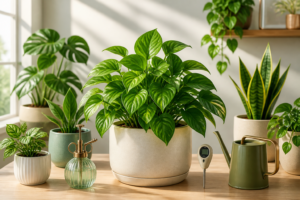
Pothos is a low-maintenance vine that is perfect for beginners. It thrives in a variety of lighting conditions and can grow in water or soil. Its trailing vines add a lush touch to any space.
3.3. Spider Plant (Chlorophytum comosum)
The spider plant is known for its air-purifying properties. It produces ‘baby’ spiders that can be propagated easily. This plant prefers bright, indirect sunlight and is safe for pets.
3.4. ZZ Plant (Zamioculcas zamiifolia)
The ZZ plant is an extremely low-maintenance option that thrives on neglect. It can survive in low light and requires minimal watering. Its glossy leaves make it an attractive addition to any room.
3.5. Peace Lily (Spathiphyllum)
The peace lily is loved for its beautiful white blooms and air-purifying capabilities. It thrives in low to medium light and prefers to be kept moist but not soggy.
3.6. Rubber Plant (Ficus elastica)
The rubber plant is a striking indoor plant with large, glossy leaves. It prefers bright, indirect light and moderate watering. It can grow quite tall, making it a stunning focal point.
3.7. Boston Fern (Nephrolepis exaltata)
Boston ferns add a lush, green touch to your home and thrive in high humidity. They prefer indirect light and need to be kept moist. They’re great for improving air quality.
3.8. Dracaena
Dracaenas are versatile plants with a range of styles and sizes. They thrive in indirect light and are relatively low-maintenance. They also help to filter harmful toxins from the air.
3.9. Aloe Vera
Aloe vera is a succulent that requires minimal water and bright light. Not only is it easy to care for, but it also has medicinal properties, making it a multifunctional indoor plant.
3.10. Calathea
Calathea plants are known for their stunning foliage with intricate patterns. They prefer indirect light and high humidity and can create a vibrant display in your home.
4. Care Tips for Indoor Plants
To ensure your indoor plants thrive, follow these care tips:
- Watering: Overwatering is one of the most common mistakes. Always check the soil moisture before watering.
- Light: Place your plants in the appropriate lighting conditions. Rotate them occasionally for even growth.
- Fertilizing: Use a balanced fertilizer during the growing season to promote healthy growth.
- Pruning: Remove dead leaves and spent flowers to encourage new growth.
- Potting: Ensure that your plants are potted in well-draining soil and containers with drainage holes.
5. FAQ Section
Q1: Which indoor plants are easiest to care for?
Some of the easiest indoor plants to care for include snake plants, pothos, and ZZ plants. These plants are tolerant of neglect and thrive in various conditions.
Q2: Are indoor plants safe for pets?
Many indoor plants are pet-safe, including spider plants and Boston ferns. However, some plants can be toxic to pets, so it’s essential to research before bringing a new plant home.
Q3: How often should I water my indoor plants?
Watering frequency varies by plant type and environmental conditions. Generally, check the soil moisture; if it’s dry an inch deep, it’s time to water.
Q4: Can indoor plants survive in low light?
Yes, many indoor plants, such as snake plants and pothos, can thrive in low-light conditions. However, they will grow best with moderate indirect light.
Q5: How do I propagate indoor plants?
Propagation methods vary by plant type, but common methods include taking cuttings, division, or offsets. Research the specific plant for the best propagation method.
Conclusion
Indoor plants are a fantastic way to enhance your living environment, improve air quality, and boost your mood. Whether you are a seasoned plant parent or just starting, there is a perfect indoor plant for you. With the tips and recommendations provided in this guide, you can confidently choose and care for your indoor greenery.